Introduction
Iceland straddles the Mid-Atlantic Ridge, making it the only place on Earth where an active spreading center rises above sea level. This four-credit volcanology camp explores the full range of volcanic processes from rift zone basalts to Iceland’s dramatic highland rhyolites, subglacial volcanic deposits, and active geothermal systems.
The course is open to both undergraduate and graduate students and is limited to 18 participants. Additional registrants are placed on a waitlist.
Topics Covered
- Mid-Atlantic Ridge rift tectonics and associated volcanism
- Basaltic shield volcanoes and lava flow field mapping
- Rhyolitic calderas and silicic volcanic systems
- Tephra and fallout deposit analysis
- Phreatomagmatic features and crater lakes
- Subglacial volcanism and jökulhlaup hazards
- Volcanic monitoring methods
- Geothermal energy systems
Prerequisites
Mineralogy and Petrology are required. Stratigraphy and Volcanology are helpful but not mandatory.
Physical Demands
Field work involves off-trail hiking in rugged terrain, including several hikes of considerable length across lava fields, ash plains, and highland plateaus. Good physical fitness is essential.
Climate and Equipment
Icelandic summer temperatures average highs in the 50s°F and lows in the 40s°F. Rain, wind, and rapid weather changes are normal. Full camping gear (tent, sleeping bag, sleeping pad) is required, along with waterproof clothing, sturdy hiking boots, and geology tools. A complete equipment list will be provided to registered students.
Airfare
Arrange your own airfare to Reykjavik (KEF). Estimated cost: $600–$1,200 depending on departure city.
Field Camp Photos
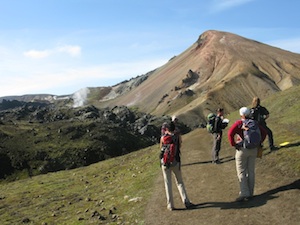
Lava field traverse, Iceland
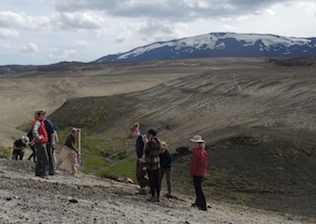
Rift zone geology, Iceland
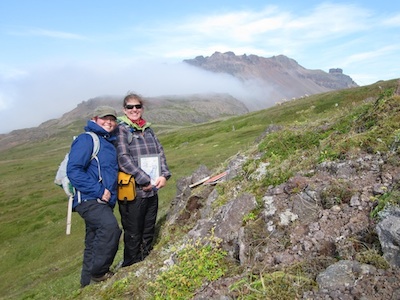
Basaltic outcrop examination, Iceland
Ready to Register?
Application deadline: March 31, 2026. Limited to 18 students — book early. $300 deposit required at registration.
Register Online