Introduction
The Death Valley Field Camp takes place in one of the most geologically diverse and visually spectacular national parks in North America. Students investigate Proterozoic and Paleozoic stratigraphy, Basin and Range extensional faulting, and neotectonic development across the Death Valley region.
The program is available in a three-credit option (ending January 12) or a four-credit option (ending January 17) that includes additional mapping projects. Both options meet in the field daily and are limited to 20 students.
Projects and Academic Focus
- Proterozoic and Paleozoic stratigraphic mapping
- Basin and Range extensional fault characterization
- Neotectonic landform analysis
- Geologic map and cross-section construction
- Field report writing and data interpretation
Prerequisites
Physical Geology, Mineralogy, and Petrology. Stratigraphy and Structural Geology are strongly recommended. Consent of the Director may substitute for prerequisites.
Physical Demands
Students should be prepared for demanding hikes of considerable length and elevation gain across rugged and steep terrain. Good cardiovascular fitness and prior hiking experience are strongly recommended. See the Physical Preparation guide.
Climate
The average January high in Death Valley is 67°F (19°C); the average low is 40°F (4°C). Conditions can be unpredictable. Wind, rain, and cold nights are possible. Layered clothing and waterproof gear are essential.
Field Camp Photos
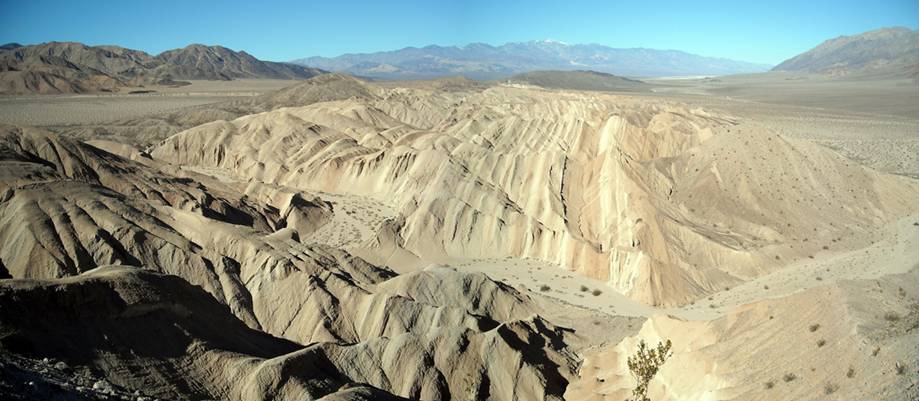
Basin-range geology, Death Valley
Ready to Register?
Application deadline: June 1, 2026. Deposit of $300 due at registration. Choose the 3-credit or 4-credit option when applying.
Register Online